
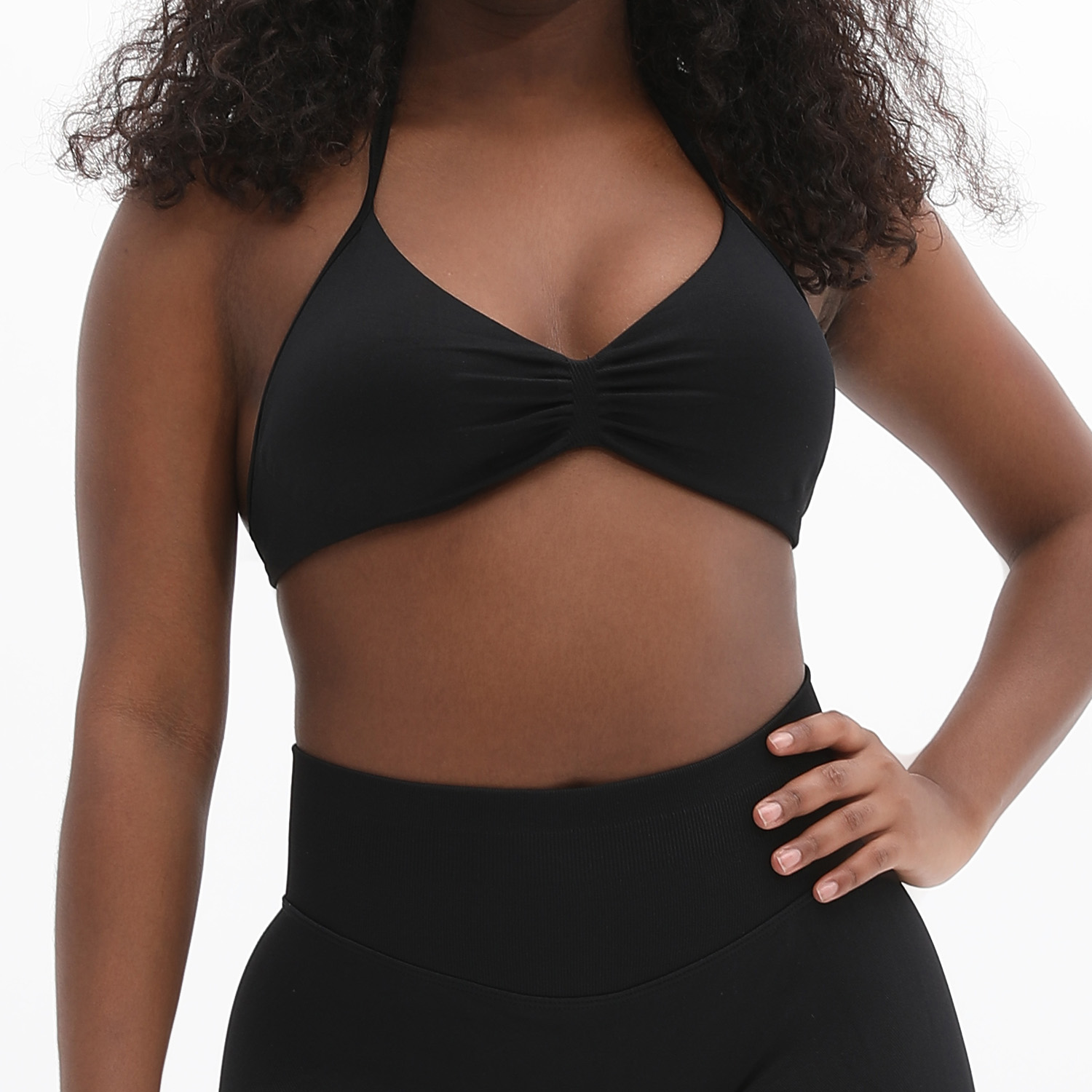
What Buyers Need to Decide Before Sourcing Leggings
Leggings are one of the most technically demanding pieces in an activewear range. They stretch in multiple directions, sit close to the skin, and are judged on fit, opacity, recovery, and seam behavior after repeated wear. A leggings program that looks straightforward at the concept stage usually raises a series of decisions before a single sample is cut: which fabric, which construction, which size range, and which development model.
This guide is written for brand owners, product developers, and sourcing teams evaluating an OEM or ODM activewear manufacturer. It explains the operating context, the main solution paths, selection logic, implementation steps, and verification criteria so you can choose and validate an approach rather than rely on a supplier's summary.
OEM vs ODM: Two Development Paths for Leggings
The first structural decision is whether you bring your own design or adapt a manufacturer's existing block. The two paths differ in who owns the pattern, how much development time is needed, and how much control you keep over fit and construction.
OEM: You Own the Design
In OEM (original equipment manufacturing), the brand supplies the design intent, specifications, and often the pattern or tech pack. The manufacturer's role is to translate that into a producible garment, source or confirm materials, and manufacture to the agreed specification. OEM suits brands with a defined fit identity and a clear point of view, because the pattern and construction logic stay with the brand.
The trade-off is development load. Every pattern, grade, and construction detail must be validated, and changes late in sampling are expensive. OEM also assumes the brand can specify fabric weight, stretch, and recovery in measurable terms rather than by feel alone.
ODM: You Adapt an Existing Block
In ODM (original design manufacturing), the manufacturer offers existing designs or blocks that the brand adapts through color, print, trim, labeling, and fit adjustments. ODM shortens the path from concept to sample because the base construction has already been resolved. It suits brands entering a category, testing a capsule, or prioritizing speed over a fully proprietary pattern.
The trade-off is differentiation. If several buyers adapt the same block, the garment can feel familiar in the market. ODM also limits how far the fit can move from the original block before it effectively becomes an OEM project.
| Decision | OEM path | ODM path |
|---|---|---|
| Pattern ownership | Brand-defined | Manufacturer base block, adapted |
| Development time | Longer; more sample rounds | Shorter; fewer structural changes |
| Differentiation | High | Moderate; depends on adaptation |
| Best fit for | Established fit identity | Category entry, capsules, speed |
| Main risk | Specification gaps | Limited uniqueness |
Fabric Selection: The First Real Constraint
Most leggings problems trace back to fabric. Before comparing suppliers, define the fabric in measurable terms: composition, weight per square meter, stretch direction, recovery, opacity, and hand feel. A supplier cannot verify a requirement that was never stated numerically.
Knitted Structures Used in Leggings
Leggings are typically circular-knit or warp-knit fabrics. Circular knits offer stretch and a soft hand; warp knits can provide a denser, smoother surface. The right structure depends on the intended use: high-impact training, studio yoga, or everyday athleisure each places different demands on support, opacity, and drape.
What to Specify
- Composition: fiber blend by percentage, stated on the tech pack.
- Weight: grams per square meter, with a tolerance band.
- Stretch and recovery: elongation direction and recovery after extension, tested to a named method.
- Opacity: tested under stretch, not only on flat fabric.
- Colorfastness: to washing, perspiration, and rubbing, with the test method named.
Opacity deserves separate attention. A fabric that passes a flat opacity check can still show through when worn at full stretch over a bent knee. Ask how the supplier tests opacity in the stretched state, and confirm the test method and acceptance level in writing.
Construction Details That Determine Wear Life
Leggings fail at seams, waistbands, and gussets more often than in the body fabric. Construction choices should be made deliberately and recorded in the tech pack.
Seam Type
Flatlock and overlock seams behave differently under stretch. Flatlock lies flatter and reduces bulk against the skin; overlock is faster but can create a ridge. Whichever is chosen, the seam must be tested for stretch and recovery so it does not crack or pop during wear.
Waistband
The waistband carries most of the garment's retention. Elasticated, bonded, and knit-in waistbands each suit different support levels. Specify band height, elastic type and width where used, and the intended stay-put behavior during movement.
Gusset and Rise
A gusset changes how the leggings sit and move. Rise (high, mid, or low) must be defined against the target body and size range, not left to the pattern maker's default. Record both in the tech pack with measurement points.
Fit, Grading, and Size Range
Fit is where leggings programs most often stall. A single sample can look correct on one fit model and fail across a size range. Define the target customer's body measurements, the fit model used for evaluation, and the grading rules before sampling begins.
Ask for a size grading table that shows key measurements at each size: waist, hip, inseam, rise, and thigh. Check that the grade increments are consistent and that the fabric's stretch is accounted for in the pattern. A pattern built for a high-stretch fabric will not perform the same in a lower-stretch one, so fabric and pattern must be developed together.
Where a program includes coordinated tops, such as sports bras, fit consistency across the set matters to the end customer. Decide early whether the bra and leggings share a size logic or are sold as separate size scales.
Sampling: What Each Round Should Prove
Treat sampling as a sequence of tests, not a single approval event. Each round should answer a specific question.
- Round 1 — construction: Does the pattern assemble as intended? Are seams, waistband, and gusset feasible?
- Round 2 — fit and fabric: Does the garment perform on the fit model and across the size range? Does the fabric meet opacity and recovery targets?
- Round 3 — production readiness: Are colors, trims, labels, and packaging confirmed? Is the measurement chart final?
Keep written records of every change between rounds. A sample approved without a corresponding spec update creates a gap between what was seen and what will be produced.
Verification Checklist Before Bulk Production
Before committing to bulk, confirm the following in writing with the manufacturer. Each item should reference a document, test method, or approved sample.
| Area | What to confirm | Evidence to request |
|---|---|---|
| Fabric | Composition, weight, stretch, recovery, opacity | Fabric test report with method and date |
| Fit | Approved fit sample and grading table | Signed sample and measurement chart |
| Construction | Seam type, waistband, gusset, rise | Tech pack with construction callouts |
| Color | Lab dips or color standards | Approved color standard per shade |
| Labels | Care, content, and brand labels | Approved label artwork and placement |
| Packing | Fold, polybag, carton marks | Approved packing specification |
Where a supplier references certifications or test standards, ask for the certificate or report itself, including the issuing body, scope, and validity date. A claim without a document is not verification.
Warning Signs in a Leggings Supplier Conversation
Some signals suggest a program will run into trouble later. Watch for suppliers who quote a price before asking about fabric weight or stretch, who cannot describe how opacity is tested, or who treat fit approval as a single sample rather than a graded range. Vague answers about who owns the pattern in an OEM project are also a risk, because pattern ownership affects future production and reorders.
Equally, be cautious if a supplier presents styling photographs as evidence of capability. Photographs show a design; they do not confirm fabric, sizing, or production performance. Confirm specifications separately.
Where Jenny Knit Fits
Yiwu Jini Knitting Co., Ltd. (Jenny Knit) was founded in 2013 and develops and manufactures knitted activewear in Yiwu, China. Its product range covers sports bras, leggings, shorts, training tops, and yoga wear. For buyers developing a coordinated collection, reference styles such as the A23B022 asymmetric back-strap bra, the A23B052 flame-print scoop-neck bra, and the A23B105 fine-pattern double-strap bra show the kind of bra designs available for discussion. Fabric, sizing, colors, and order requirements are confirmed with the team before production.
Use the checklist above as the basis for the first conversation. Bring your fabric targets, size range, and fit references, and ask which development path — OEM or ODM — fits your timeline and differentiation goals.